

Lauren Piovesan
Founder of ESL Reads
EAL Teacher
Being able to communicate is power:
A whole-program approach to teaching oral language through a pronunciation lens
May 6, 2026
Written by Lauren Piovesan in collaboration with Elizabeth Keenan and Dr Beth Zielinski
Bios and Background
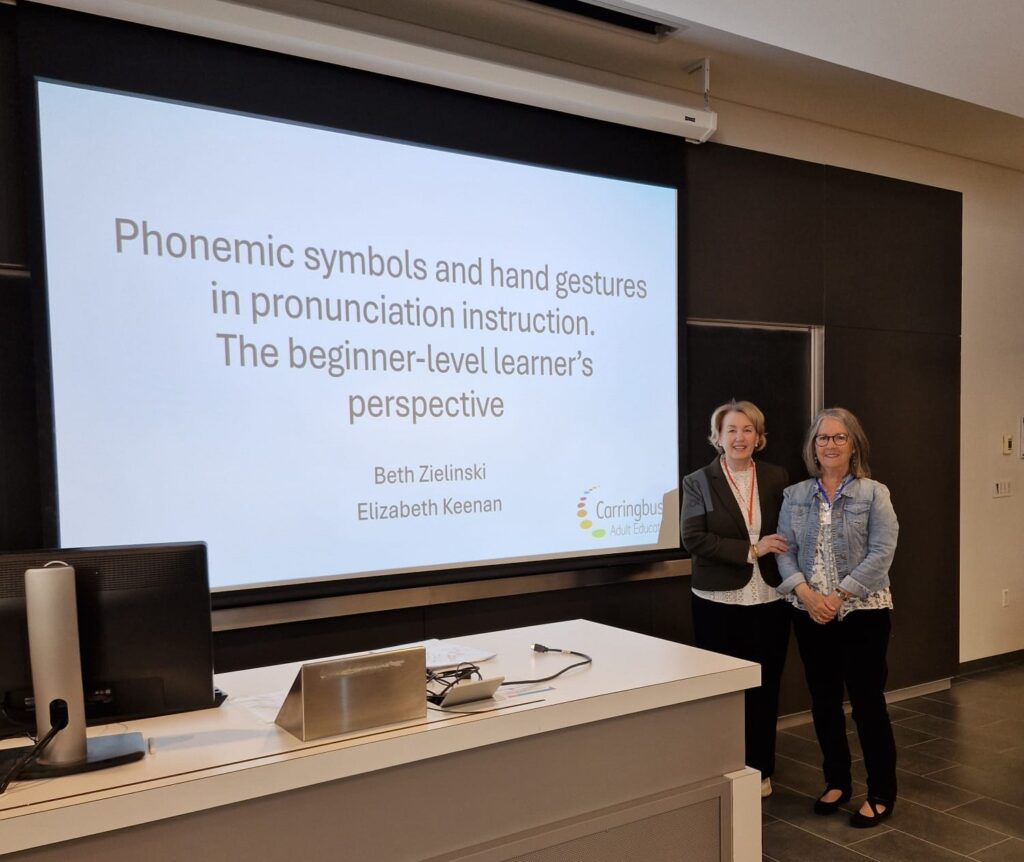
Elizabeth Keenan (Liz) began her career as a primary teacher and later completed a Masters of TESOL. She has worked at Carringbush Adult Education for fourteen years, largely teaching English as an Additional Language (EAL) learners at the beginner level. To help develop their oral communication skills, Liz and Margaret Corrigan, the CEO of Carringbush, attended an intensive pronunciation course with Adrian Underhill. Liz was awarded the International Specialised Skills Institute (ISSI) Fellowship and undertook a study tour to investigate best practice pronunciation teaching. This included visiting like organisations (e.g. Literacy Minnesota), attending conferences and interacting with experts in the field, Dr Beth Zielinski being one of them. Liz has completed various courses, including Interlanguage Phonology, the Science of Reading, the Science of Learning and Sounds-Write.
Dr Beth Zielinski began her career as a speech pathologist and later moved into teaching pronunciation to EAL students and staff at the University of Melbourne. She completed a PhD investigating the features of pronunciation, an under-researched area at the time. Beth lectured at La Trobe University. Then she went on to work at Macquarie University where she contributed to a longitudinal study about migrants settling in Australia and learning English in the Adult Migrant English Program (AMEP). Beth was also involved with AMEP teacher professional learning, and developed a resource for teaching pronunciation with Prof. Lynda Yates. She has contributed significantly to research in the field of L2 pronunciation learning and teaching.
Carringbush Adult Education, driven by CEO Margaret Corrigan, has a strong commitment to high quality, evidence-based practice and as such, willingly collaborates with researchers. Carringbush developed a whole-of-program approach to teaching oral language through a pronunciation lens grounded in both classroom practice and research. Carringbush has greatly benefited from the guidance of such high calibre researchers as Dr Shem Macdonald and Dr Beth Zielinski. Beth and Liz have worked together in a researcher-practitioner partnership for over a decade to support the approach. More recently, they have been conducting research which explores the use of the International Phonetic Alphabet (IPA) and Cued Articulation gestures with beginner-level learners. This research was presented at the VicTESOL Conference in Melbourne and PSLLT (Pronunciation in Second Language Learning and Teaching) Conference in Montreal in 2025 and continues to evolve.
This blog will explore Liz and Beth’s journey with both the research and classroom practice around improving beginner-level learners’ oral communication skills through a pronunciation lens.
"I don't have the skills to help them." - Liz
When Liz first started at Carringbush, she had beginner-level learners mostly from Vietnamese backgrounds. It wasn’t long before, “I felt I didn’t have any skills to support them with their oral communication.” Liz realised her teaching practice simply wasn’t improving her learners’ oral language abilities. She commented, “I needed to upskill because I just didn’t know.”
Around the same time, Carringbush conducted a survey with learners. Overwhelmingly, the one thing that learners most wanted to do was to be able to speak and be understood. Liz sees being able to communicate as power. The learners had spoken, and Carringbush, with Margaret Corrigan steering the ship as CEO, was prepared to take their requests seriously. They invested heavily in building their whole-program approach around oral communication and pronunciation.
“We wanted to know that what we were doing was right.” - Liz
How many times have we, as teachers, started a new classroom approach and wondered if we were doing it right, if it was making a difference or if it was evidence based? Liz emphasised that “there has to be some rigour around what we’re doing.”
With Beth engaged in the process, she provided the research backing to support Liz. Liz would bring questions from the classroom, Beth would seek out research and together, they would discuss its implications for teaching. When the research was limited or seemingly non-existent, Beth would find answers from an international community of researchers and practitioners. More recently, Beth has been observing and participating in Liz’s classes. Beth feels it’s important for a researcher to understand the learners and their learning context. Liz benefits greatly from Beth’s breadth of knowledge and observations.
“Accent is often the scapegoat.” - Beth
So when we’re talking about pronunciation and intelligibility, what do we actually mean?
Under Tracey Derwing and Murray Munro’s widely used framework (1997), Beth describes three elements:
- Accent which describes “how different a language sounds compared to the general accent of the community.”
- Intelligibility which describes “how much you can actually understand.”
- Comprehensibility which is about “how hard it is to understand someone.”
These elements overlap and inform each other. For example, “You can have a really heavy accent, but people can understand you, although it might be really hard for them… so the comprehensibility is low.” Comprehensibility can also include grammar, pragmatics and other linguistic components.
Sometimes, teachers use “accent as a scapegoat,” when they find a student difficult to understand. But in reality, there can be numerous factors that decrease intelligibility and comprehensibility.
As part of teaching oral language, Carringbush has focused on the teaching of segmentals and suprasegmentals in pronunciation instruction. Segmentals are individual sounds or phonemes, and suprasegmentals include stress, rhythm, intonation and other features of connected speech. These elements are essential for effective oral communication skills, which work to support the development of literacy.
“Pronunciation is integrated through the whole day.” - Liz
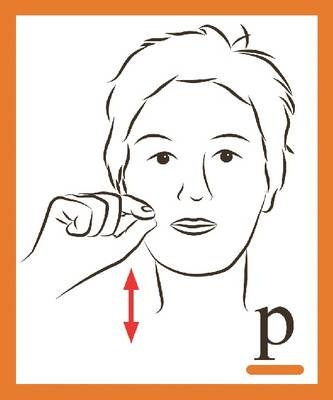
The approach to teaching sounds at Carringbush includes the use of Adrian Underhill’s IPA chart accompanied by Jane Passy’s Cued Articulation hand gestures. These gestures represent the place and manner of articulation, providing learners with a visual and kinaesthetic way to understand and produce sounds. These two tools are consistently embedded across levels from the beginner-level learners where there is a greater focus on gestures, to the more advanced learners where there is a greater focus on the IPA chart.
Carringbush has dedicated blocks of time for oral communication and pronunciation. Teaching of sounds includes a focus on the production of weekly target sounds in various meaningful contexts together with the associated spelling patterns. “Pronunciation is then integrated throughout the whole day,” Liz explains. For example, if a learner mispronounces a word, the teacher might tap the symbol on the IPA chart for the sound required to pronounce the word appropriately. “Learners make the repair themselves and it’s very unintrusive,” explains Liz. Gestures are also used to accompany words at the beginner level to help them remember how to pronounce the sounds. When using texts, teachers explicitly unpack the pronunciation of key words so learners can produce them intelligibly when reading.

“Start with meaning, then production, then form.” - Liz
Our lessons always begin with meaning, “otherwise it won’t stick,” Liz explains. With beginner-level learners they need to start with the meaning of the words to build their vocabulary. Liz explains the process as follows.
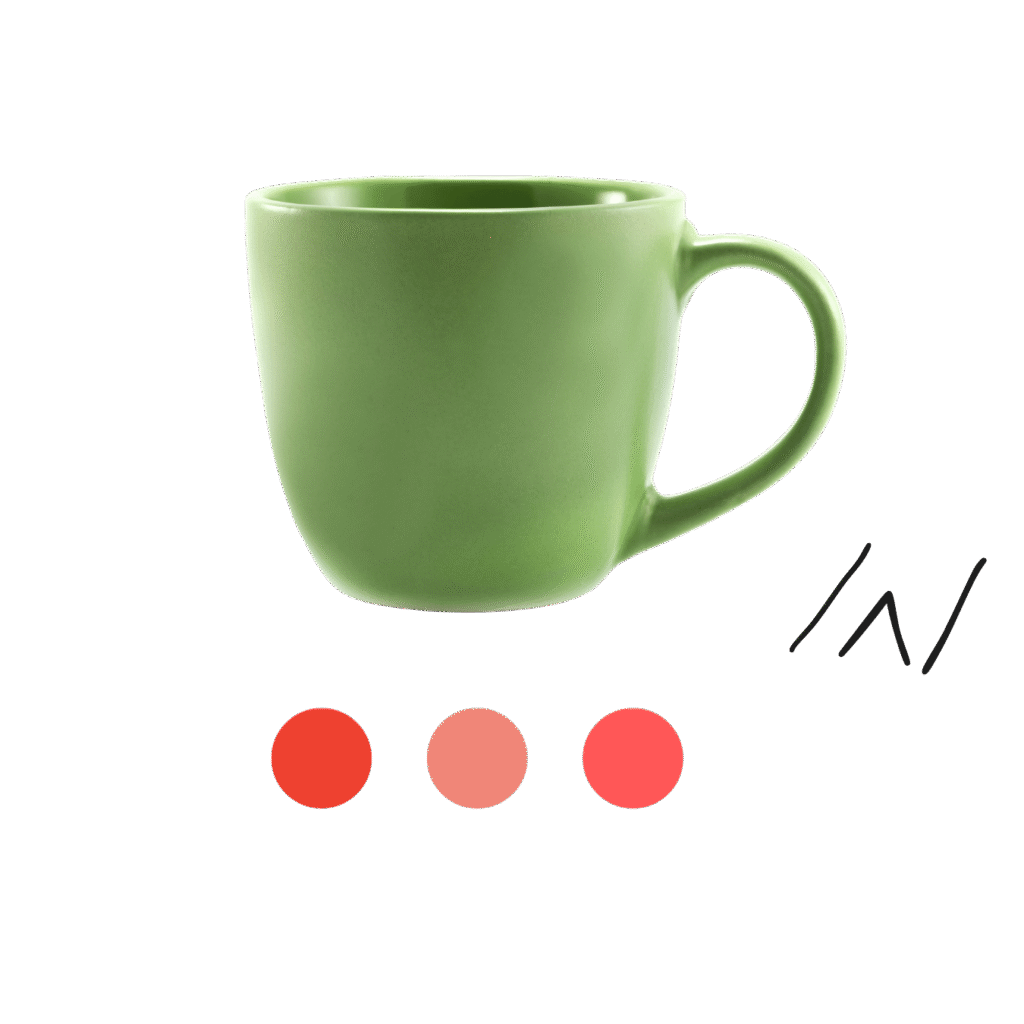
Beginner-level lessons begin with an image of a target word, for example, a picture of a cup. We would ask these questions:
- What is this?
- What is it in your language?
- Does anyone know the word in English?
- What is it for?
- What is it made of?
- What can we do with it?
This work is all done orally without reference to the visual representation of the word.
Next, we focus on the production of the word, using accompanying gestures. Teachers could refer to the IPA when differentiating between similar sounds or if a learner is not producing the appropriate sound. To build phonemic awareness, the teacher might ask:
- How many sounds can you hear?
- What’s the first sound?
- What’s the second sound?
- What’s the last sound?
Learners practice the word as a whole class, then have plenty of opportunities to practise it with their classmates in pairs. There’s lots of repetition.
The target word is then used in a sentence, for example, “This is my cup.” This is particularly important because sometimes sounds change in connected speech.
Lastly, we bring in the written “form” and learners write the word using letters (graphemes), not the phonemic symbols.
In contrast, at the higher levels, the teacher may introduce the written form much sooner.



“Assessing at the beginner level is really difficult.” - Beth
This explicit and highly-scaffolded approach allows for formative assessment opportunities. Teachers are constantly scanning the room to check for learners’ responses to teaching through hand gestures, pointing to sounds on the IPA chart or writing on their mini whiteboards.
While assessments at this level may capture little progress, teachers may observe progress in other ways such as responding with the correct gestures or pointing to the correct symbol on the IPA chart. Beth recalls a learner who had been sitting quietly in class, rarely speaking aloud or actively engaging. Liz had thought, “We just don’t have her yet,” until one day, Beth caught sight of her quietly using Cued Articulation gestures under her hijab. How could a formal assessment tool capture that?
“But isn’t the IPA confusing, especially for pre-literate learners or those new to an alphabetic script?” - Lauren
Teachers often assume that using the IPA while teaching the letters of the alphabet will result in cognitive overload for beginner-level learners. Liz challenges this assumption and reiterates that this is an explicit, scaffolded approach. “At the beginning, learners are introduced to the IPA chart, how the sounds are made and are supported by gestures. Then, there’s a link to the graphemes that represent those sounds in spelling and writing. We differentiate between letter names and sounds, and the gestures really support that process.”
“We’re also not operating from a deficit model. Our research has shown that this approach is empowering them (beginner learners),” Liz adds. This empowerment is evident in the classroom where Beth remembers one student providing feedback to her classmate. The learner stood up and said to her classmate, “No it’s ‘oo’ and she used the gesture to support her feedback. This learner had only had two years of schooling in her home country, but here she was, completely owning this new knowledge and using it to assist others.
“We know it’s working.” - Liz
Beth and Liz, seeing a gap in the research for beginner learners, decided to test the effectiveness of the Carringbush approach by conducting their own research. They began with five class participants of Vietnamese and Ukrainian backgrounds. Through a series of interviews using interpreters, it was clear that “learners viewed both the chart and the gestures in a positive light,” Beth recalled. Learners specifically discussed how the gestures supported their learning and helped them produce sounds. “They were just so insightful.”
The learners saw the approach as valuable and beneficial, and were applying their new knowledge to both the classroom context and the outside world. One of the learners discussed how she thinks about the gestures in her mind to help her with pronunciation when she wants to order a special coffee at a café.
If you’ve ever seen Liz’s class in action, it is evident how engaged the learners are, all sitting forward in their seats, eagerly responding to the IPA chart and producing the hand gestures. “Learners have been able to do things with it we never thought possible,“ adds Beth.
So yes, “We know it’s working. Our research is showing it’s working. Our learners are coming back and they’re incredibly engaged,” says Liz enthusiastically.
“Teachers need to know about pronunciation.” - Liz
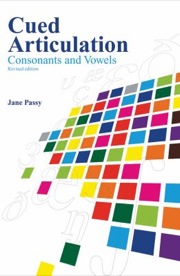
If you’re new to teaching pronunciation and are wondering where to start, Liz recommends you begin by learning the IPA chart and Cued Articulation gestures as they will become important components of your teaching toolkit. Adrian Underhill’s Sound Foundations book and videos, and Jane Passy’s Cued Articulation book and videos provide valuable information.
While Liz acknowledges that the IPA chart can “look quite overwhelming… you can just go slowly and start familiarising yourself with it. Have a go at introducing it with students. Consonants are an easier place to start because you can really feel what’s happening in the mouth and you can see it; it’s much more visual.” Both the IPA chart and gestures are significant because they give you the “visual framework” for understanding the sound the learner is producing, and the sound you want them to produce to be more intelligible. From there, you can work out how you can support your learners to get there.
Beth adds that “learning the IPA chart is not just about learning the symbols. It’s the articulation of the sounds, how they’re made and how they relate to each other.” She reassures us that the IPA is, “not a thing to be feared. You can do it!”
“Yes, help learners explore the sounds.” Liz adds. “I get them to close their eyes, we produce the sound and I ask them to notice what’s happening in the mouth.” The exciting thing is that learners support each other in their language to produce the sounds and may even produce their own metalanguage to describe the sounds, like the “bumpy” sound.
While Liz and Beth advise that teachers learn about the segmentals (sounds/phonemes) through the IPA chart, it’s important to note that pronunciation instruction includes other equally significant components such as the suprasegmentals (stress, rhythm, intonation and connected speech). “When introducing a word, we not only identify the sounds, we identify the number of syllables and the stress pattern, both of which are supported by gestures. We also use the word in an utterance with attention to intonation and rhythm. It all happens at the same time,” explains Liz.
“Pre-service pronunciation courses are hard to find.” – Beth
When asked what Beth and Liz would like to see change in the EAL space, they reiterated the significance of learning how to teach oral language and pronunciation as part of teacher training. Unfortunately, it’s not easily found in pre-service courses around Australia. Our teachers need to know, “how to support learners to know the sounds and the features of connected speech, because all of this impacts learners’ ability to read and write,” says Liz.
Liz goes on to describe the challenges around finding a systematic, synthetic phonics program that provides a bridge between pronunciation and the development of literacy skills for beginner-level learners. We need one that “does it all; a pronunciation lens and an EAL lens. I haven’t found a program that starts where I feel we need to – with vocabulary first, then sounds and using that as a springboard for literacy.”
In both the teaching and academic space, I think there’s a lot to be learnt from the collaboration had between Beth and Liz. Beth firmly believes that “there needs to be more communication between teachers and researchers.”
There’s no stopping this duo! - Lauren
Lucky for us, Beth and Liz are continuing their research, next with a focus on participants from Somalia and Ethiopia. They are looking to investigate the use of the IPA and gestures with learners who have had little or no formal schooling, and how their pronunciation approach links to literacy development.
Beth and Liz have been extremely brave to go where few have dared to go, into the depths of effective pronunciation practices for beginner-level EAL learners. They have not only dedicated numerous hours to building their own knowledge but have been courageous enough to put it to the test in the classroom and assess it against rigorous academic standards. Their generosity in sharing their findings with colleagues, teachers across Australia and with me at ESL Reads stands testament to their passion and commitment to empowering our learners. Thank you Beth and Liz for your incredible work and we can’t wait to learn more from your upcoming research!
Carringbush Adult Education, located in Richmond, an inner-city suburb of Melbourne, is a not-for-profit, registered training organisation providing accredited and pre-accredited language, literacy, numeracy and digital skills classes and pathways support to residents of Richmond, Collingwood and surrounds, including those living in public housing. Many of the learners have barriers to participation in training and employment.
Some resources for teachers and learners have been created by the staff at Carringbush and are freely available.
Reading Series – https://carringbush.org.au/carringbush-reading-series/
Teacher training videos – https://carringbush.org.au/teacher-training-videos/
Please note that the “Sounds” teacher training video was recorded when Carringbush was using Adrian Underhill’s gestures to support sound production. Since then, Carringbush has updated its approach to use Cued Articulation gestures, as these more explicitly represent the place and manner of articulation.
References:
Derwing, T. M., & Munro, M. J. (1997). Accent, intelligibility, and comprehensibility: Evidence from four L1s. Studies in Second Language Acquisition, 19(1), 1–16. https://doi.org/10.1017/S0272263197001010